
Margin
Social writing platform MVP
A three-person KACHOW! team built the MVP of a social writing platform in seven weeks: drafts, feedback, collaborators, folders, and billing, from empty repo to live app.
Tools: Next.js, TypeScript, Tailwind CSS, Hasura, Auth0, Stripe, AWS S3, Vercel
Write With MarginNick Cortellessa
KACHOW! LLCKarina Chow (lead frontend)Kevin Mitchell (lead backend)Nima Niazi (full stack, support and maintenance)
Eight features in two minutes, stitched from the weekly demo recordings.
The Ask
Margin is a writing network: a place for writers to find, offer, and manage feedback on drafted work, built around the understanding that a draft is a different object than a published piece and deserves different plumbing. Founder Nick Cortellessa had the vision and needed it to exist. In June 2024 KACHOW! took it on as a full team engagement: Karina Chow as lead frontend, Kevin Mitchell as lead backend, and Nima Niazi across the stack, building features and keeping the shipped ones running.
Nick arrived with Figma designs already produced by a designer contractor; the brief was to turn them into the whole working product. Auth, profiles, uploads, organization, sharing, feedback, notifications, billing: an empty repository on June 4, a working platform by the end of summer.
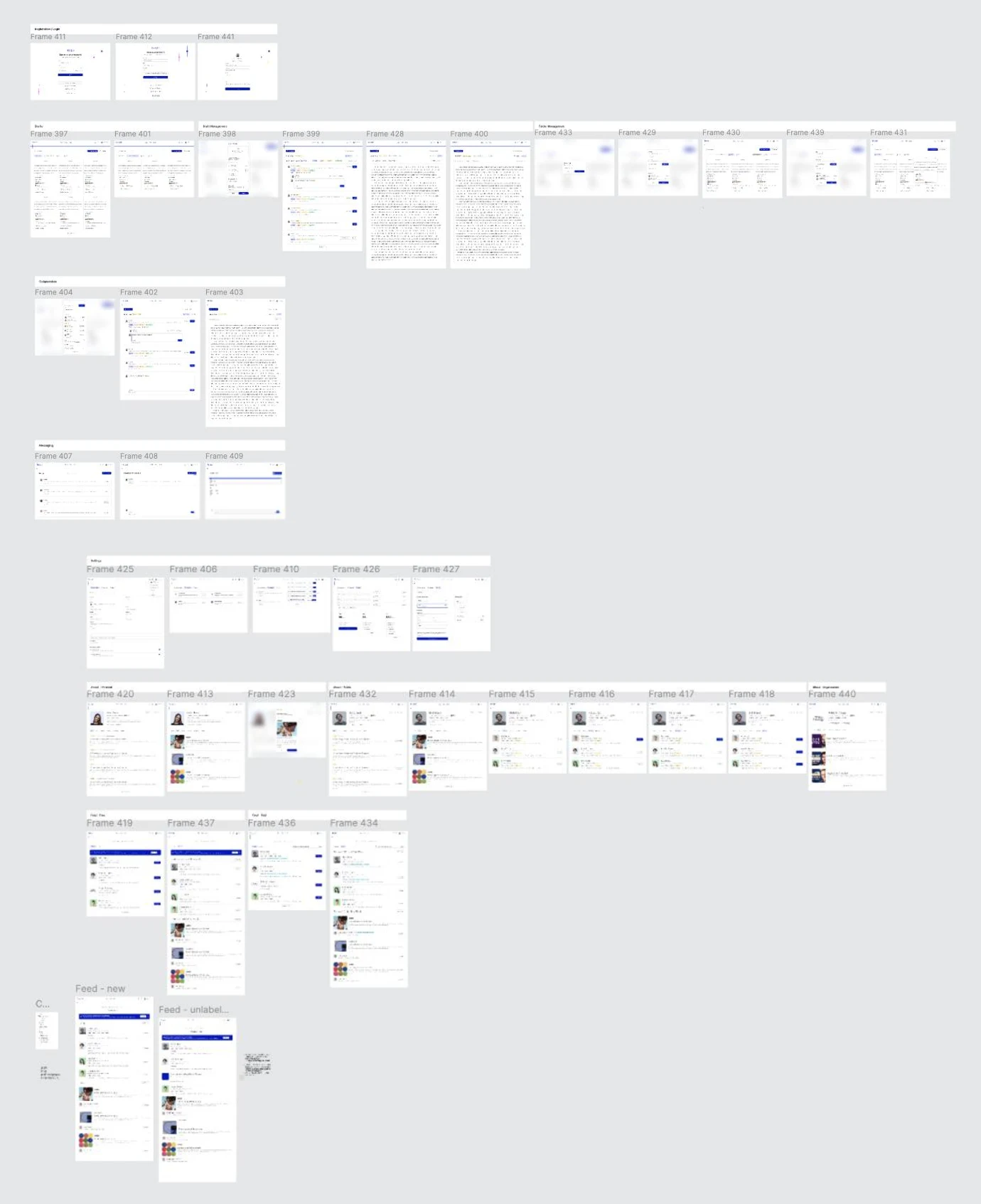 Designs v1. Forty-odd frames between sign-in and feed.
The Process
The engagement ran on a simple rhythm: build a feature, screen-record it, send the recording, keep moving. Twenty-six demo videos went out over seven weeks, and they map the build better than any status report. Late June was the library: uploading drafts with drag-and-drop and tags, folders, pagination, search. Early July was import, connecting Google accounts so drafts could come straight from Google Docs, with textract handling the .docx files writers actually have. Mid-July turned it social: public and private sharing, following, feedback submission, collaborator invites on both drafts and folders, notifications, and then the network feed that made it feel like a place rather than a filing cabinet. By late July the videos were about tag approval flows and billing intents, which is the moment an MVP starts admitting it plans to be a business. The tags got approved from an admin portal called WaldenPond, because a writing app deserves one named after Thoreau's cabin.
The stack was Next.js with Auth0 for identity, S3 behind CloudFront for uploads, Stripe for billing, and an MDX-based editor. The data layer was Hasura, which generates a GraphQL API straight from the database schema, so there were no CRUD endpoints to hand-write and live subscriptions came included: that is what kept feedback threads updating as new messages landed. For a three-person team on a seven-week clock, it was most of a backend we never had to write. We seeded the test environment with our own writing (good thing I already wrote Medium articles), so for several weeks the world's smallest writing network consisted of our essays being followed, tagged, and reviewed by the three of us.
The Outcome
Seven weeks after the first commit, the platform did everything on the list: drafts in, feedback flowing, collaborators invited, folders shared, tags moderated, billing wired. The engagement wrapped with a debugging epilogue in late August, and marginapp.io is live today.
The work split about evenly between frontend and backend, which is what happens when a product is as much about permissions as it is about pages. It remains the fastest zero-to-product build in the KACHOW! catalog.